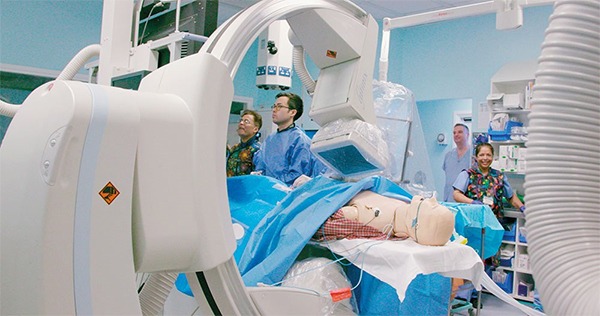
Neurosurgeons have been, and currently are among the greatest movers in medical science, typically a challenge to move the boundary of what is known earlier to address the tough brain and spine disorders. It is necessary to update the training methodologies to prepare neurosurgeons better to bridge such complex topography of the human brain.
This is an article that delves deep into the world of cutting-edge neurosurgical training, zeroing in on simulators, CT simulation radiation therapy in today's and future roles concerning the training of the next generation of neurosurgeons.
The Evolution of Neurosurgical Training
From old-fashioned apprenticeship models to highly technologically driven systems, neurosurgeon training has changed with the times significantly in the past few decades. Neurosurgery, as a field, was an apprenticeship-based master-schooling discipline where neurosurgical skills were acquired by personal involvement in the operation theater and practice under qualified masters. Though this process remains highly valuable, advanced simulation technologies have changed the training paradigm over the years.
Neurosurgical Simulators: A Virtual Training Ground
Neurosurgical simulators have become an important part in modern training; they represent a safe and controlled environment for surgeons to hone their skills. The simulations reproduce the complexities of the human brain and spinal cord, providing a realistic surgical experience without the usual hazards of performing on humans.
Among the most essential tools for training purposes in this area is a comprehensive surgical training software package, called SurgeonsLab. SurgeonsLab includes a set of neurosurgical simulation modules oriented toward reproducing specific surgical situations. From resection of a brain tumor to clipping an aneurysm, complex surgical paths are passed over, and performance is monitored in real time.
These factors make the procedure extremely immersive for neurosurgeons-in-training to acquire crucial skills, such as hand-eye coordination, instrument handling, and making decisions under pressure. Ability to repeat procedures, analyze mistakes, and learn from mistakes highlights the main advantages, allowing for a culture of continuous improvement.
CT Simulation Radiation Therapy: Precision in Pre-Operative Planning
CT simulation is an important procedure in the neurosurgical workflow, largely used in the process of preoperative planning. As per the radiation oncology department at New York Presbyterian, "CT simulators take the minutest of a patient's anatomy inside and produce high resolution 3D images of where the surgeon would like the surgical field to be localized in relation to other structures.”
It is based on a CT simulation wherein the site of treatment is said to be represented relative to external markers by means of appropriate measuring instruments. This procedure is therefore essential to define both the surgical field as well as the design of immobilization devices that assist the patient to maintain stability during the treatment.
The advantages of CT simulation do not end there: with it, neurosurgeons can see exactly how to perform the surgery, predict what might go wrong in that performance, and accordingly make changes to their strategy. By simulating the procedure, surgeons can optimize their techniques and minimize the complications that may arise, hence enhancing general surgical outcomes.
Radiation Therapy: A Training Ground for Precision
Radiation therapy is another critical part of cancer treatment, and also a great place to learn for neurosurgeons. Programs of radiation oncology, like NewYork-Presbyterian, normally incorporate simulation procedures meant to familiarize trainees with such specifics.
In simulation in radiation therapy, basically, it is possible to locate the region of interest and the critical surrounding structure. The trainees learn to read those 3D images and understand the interactions between the tumor and normal tissues. This information is helpful for the region of interest to be treated with radiation without injuring the region immediately adjacent to it.
In addition to interpretation, the trainees are also instructed in practical aspects of radiation treatment, including patient positioning and immobilization. Neurosurgical trainees obtain hands-on experience with advanced radiation equipment so that they can aptly deliver precise treatment using radiation.
The Impact of Simulation-Based Training
Simulation-based training profoundly impacts the development of neurosurgeon skills with numerous benefits being achieved through simulation-based training:
Safety: There is a risk-free environment, allowing the trainees to commit mistakes and learn from them without having any influence on the patient's safety and well-being.
Realism: Advanced simulation technologies can mirror the complexity of neurosurgery and enable a highly realistic experience.
Customization: Simulations can be tailored for the learning needs of each individual or focus specifically on procedures or challenges of surgery that a trainee is struggling with.
Repeatability: Trainees can repeat procedures, reinforce skills, and develop confidence.
Instant response: The instantaneous nature of receiving feedback about performance enables it to hone skills immediately.
Conclusion
Excellence in neurosurgery therefore demands new methods of training. It is only through a neurosurgical simulator, CT simulation, and radiation therapy training that neurosurgeons can become expert practitioners in a safe and controlled environment.
By embracing these high-tech innovations, neurosurgeons will continue to hone their skills yet further, increase their precision, and benefit patient outcomes. Of course, the upward spiral of neurosurgical expertise and advanced simulation only will continue to evolve the future of brain and spinal surgery and confirm neurosurgeons at the pinnacle of medical innovation.
The article spoke about the true transforming potential for trainees in neurosurgery, giving an overview of techniques and technologies that are shaping the field. As the medical landscape continues to evolve, the role of simulation only grows in significance in ensuring that neurosurgeons will be equipped better to meet challenges ahead.