Endovascular procedures are becoming more and more important in modern medicine as they offer minimally invasive therapies for vascular problems.The need for more detailed and thorough training has increased as these methods progress. The creation of angiography simulators, which have revolutionised medical education, is a significant advancement in this field. These simulators provide a secure, regulated setting for honing abilities, improving output, and lowering the hazards associated with doing processes in the real world.
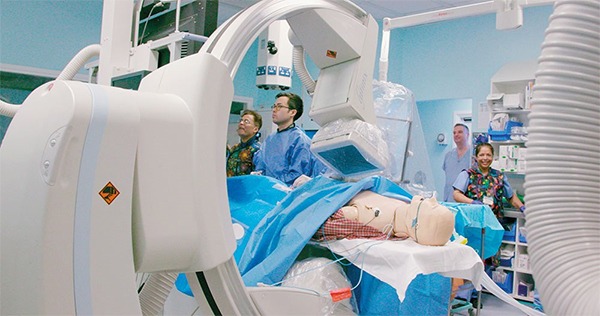
Endovascular Simulation's Significance in Medical Education
Angioplasty, stenting, and aneurysm repair are examples of complex endovascular operations that need a high level of expertise, precision, and competence. In the past, medical personnel acquired these skills through practical training, frequently while handling actual patients. But there are hazards associated with this method, especially in uncommon or complex circumstances where errors can have catastrophic consequences.
By enabling trainees to practise these procedures virtually before ever entering the operation room, endovascular simulators solve this problem. These simulators provide a realistic training experience by simulating real-life settings with superior 3D imaging and haptic feedback. By bridging the knowledge gap between theory and practice, this simulation-based approach makes sure that doctors are ready for whatever obstacles they may encounter in clinical settings.
Technological Developments in Simulation
Endovascular simulator technology has advanced significantly in the last several years. .Modern systems provide incredibly detailed simulations that mimic the intricacies of human anatomy and the subtleties of vascular treatments, but the realism and feedback of early models were restricted. Important developments consist of:
- High-Resolution 3D Imaging: With the use of sophisticated 3D models of the vascular system, users of contemporary simulators may precisely see and navigate through arteries, veins, and other anatomical structures. Understanding the nuances of endovascular procedures—where even minor mistakes can have serious consequences—requires an attention to detail like this.
- Haptic Feedback: Gaining a feel for the devices and the resistance they meet within the body is a crucial part of endovascular training.Before practicing on actual patients, this function enables learners to build muscle memory and confidence in their skills.
- Real-Time Performance Metrics: Endovascular simulators monitor performance in real time while also offering a realistic environment. In order to provide trainees with timely feedback, metrics including procedure time, tool manipulation accuracy, and error rates are tracked. This data-driven method helps identify areas that require additional growth by enabling personalised learning and targeted improvements.
- Customisable Scenarios: Endovascular simulators are made to take into account the fact that every patient has different needs. In order to make sure they are ready for anything they might see in practice, trainees can experience a wide range of scenarios, from common cases to extremely difficult or uncommon conditions.
Effect on Safety and Patient Outcomes
Patient outcomes and safety have been significantly impacted by the advent of endovascular simulators. These simulators lessen the possibility of mistakes in actual procedures by offering a secure setting for technique refinement and practice.
Medical practitioners can improve their abilities in a safe, controlled environment with the help of simulator training, which provides priceless opportunities. Simulators training Opportunities give practical experience with complicated operations by simulating real-life events.
This helps them hone their techniques, sharpen their decision-making skills, and increase accuracy. These platforms promote confidence and competence in carrying out complex activities by allowing repeated practice without the hazards associated with working on real patients.
Endovascular Simulation's Future
It appears that endovascular simulators have a promising future. We may anticipate increasingly more advanced simulations in the future that combine machine learning, augmented reality, and artificial intelligence (AI) to improve training even more. These developments will benefit patients globally in the long run by increasing medical professionals' proficiency and facilitating safer, more effective, and efficient vascular treatments.


